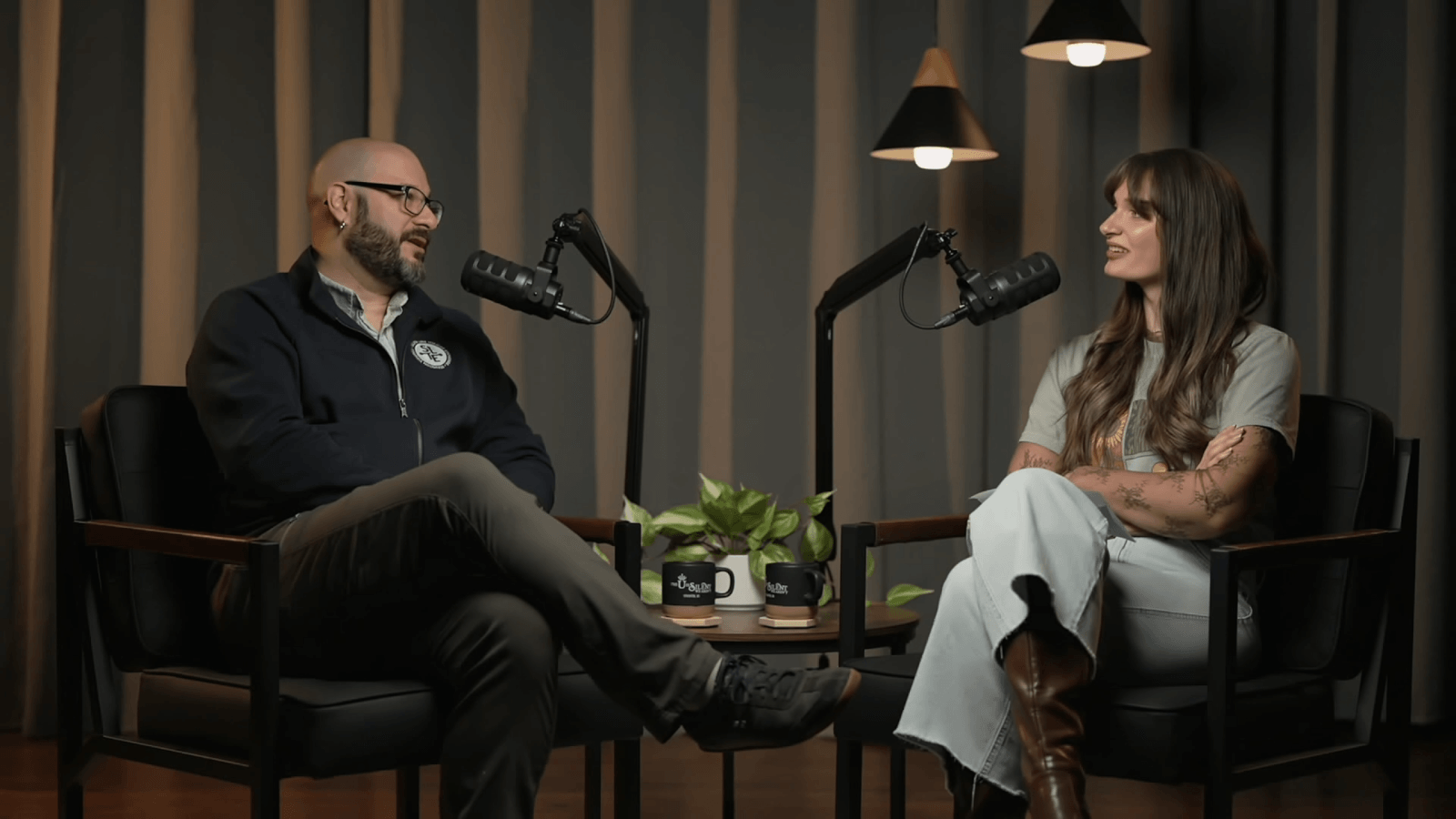
The U is Silent; We Aren’t – S2, E5
The Silver Line: What Happens When You Stop Waiting for Permission to Build Something Beautiful
“Cool stuff doesn’t happen unless there’s a lot of love in the room.” That’s Jeremy West, Artistic Director and Founder of Silver Line Theatre Exchange—a black box educational theatre built inside a converted Staunton warehouse by a teacher, a former student, and a whole lot of belief in what a small city can hold.
When 2020 forced a pivot, he decided to build something Staunton didn’t know it was missing. Jeremy shares the winding road from Alabama stages to the American Shakespeare Center to a converted warehouse on Lewis Street, and makes the case that building something beautiful is always worth it. You just have to stop waiting for permission.
About This Podcast
The U may be silent, but Staunton has a lot to say. Join Visit Staunton as we sit down with inspiring individuals at the top of their craft. We’re chatting about what drives their passion, the actions behind the impact, and a little about the place where they’re making it all happen.
SUBSCRIBE NOW!
The U is Silent; We Aren’t is available wherever you listen to podcasts. Click the links below to subscribe and listen in to audio only. If you like what you hear, don’t forget to subscribe, give this video a like, and tell your friends.
TRANSCRIPT
0:09
Welcome back everybody. The U Is Silent, We Aren’t podcast right here in Staunton. So happy to have you guys joining us.
0:17
The season has been so much fun. I am so super excited to sit down with our guest today. Um, if you guys have listened to
0:24
literally any episode, you will probably have figured out that I am a huge theater lover, um, in all facets,
0:31
especially when it incorporates education and community and all the different components that I believe make theater a better place. So, welcome
0:39
Jeremy West, artistic director and founder of Silver Line Theatre Exchange right here in Staunton. So happy to have you. Thank you. Glad to be here.
0:47
We uh, I’ve shared before, we may be distantly related. So West was my maiden name. So right we may be may be related there.
0:56
Exactly. Well, I don’t know how from originally from Alabama. So yeah, my dad’s from Indiana. Okay.
1:03
We’ll look at later.
1:05
Yeah, you’ll get on ancestry.com or something,
1:08
right? Like I know it. Anyway, I’m so excited to have you. And then I Okay, I am going to put you on the spot. U I was thinking this morning as I was brushing
1:17
my teeth. Is there a line from a play or a show that sticks in your head constantly?
1:24
I’ll tell you why. Here’s mine.
1:26
I think about it at least every other day. Uh, Friends, Romans, Countrymen,
1:30
lend me your ears, Caesar. And then I’ll go through like a few more lines.
1:34
I think it’s because we um, shout out to former professor Peter Ellen Stone. We used to warm up with it, but then anytime I enter a room,
1:43
it like instinctively in my head, I don’t know. Do you have do you have a line that just won’t leave you alone?
1:50
Uh that just won’t leave me alone. I mean, there are there are many that come to me at at various times um given the
1:57
circumstances. Uh sometimes they’re from characters that I’ve played or sometimes they’re just plays that I’ve taught in in the classroom. But the one that just
2:05
came to me and I and I I honestly don’t know why, but the one that just came to me when you asked me is actually from Fences.
2:12
um uh just because it’s one of my favorite monologues and it’s such a great it’s a great way it’s a great
2:20
conversation that is misunderstood and when the son looks at him and says hey you know um
2:28
why don’t you like me to his dad and his dad says what law is there that says I got to like you and there’s something really fun about
2:37
that response that you you know you in initially you’re going to think that it’s not a nice guy to say that to a son. Um, but he’s trying to teach him something. Yeah.
2:46
And there’s something really interesting about the the pedantry of forcing the kid to think that it doesn’t matter if somebody likes you,
2:55
right?
2:56
Uh, it matters that they do right by you, he says. Um, so yeah, I’ve always thought Troy was a fascinating and complicated character and I love that
3:04
that speech and I don’t know why that one came to me just now, but yeah, sometimes I’m just going to keep that in the back pocket like what law is there?
3:10
What law is there? says, “I got to like you.” Yeah. Yeah. Yeah. I also catch myself saying, um,
3:15
one of one of my, uh, scenic professors in college, Tony, hello, man. Everybody’s getting shout outs. Um,
3:22
so Cats is, you know, Yeah.
3:25
Some people love it, some people love it. It’s a It’s a divisive show, you know. Those that don’t. Yeah.
3:32
Though, like anytime something was stressful,
3:34
he would just say, “It’s better than Cats. It’s going to be better than Cats.” So, anytime I’m like in the midst of something, I’m like, “Better than cats.” And I just see people looking like, “Yeah,
3:43
what?” I’m like, “Sorry, sorry, I digress.” Anyways, okay. I love that.
3:47
Fences is also um it’s also one of my favorite plays to read like beautiful in person. Nothing. It’s just stunning. But to read,
3:54
it it translates so well. And I feel like when you when you have a writer and a that’s when you
4:02
know something’s just so so good is when you can also sit down with it and see it in the same way. And have you seen the film version that came out with Denzel? I was so
4:11
I was so nervous. They did so well by it and it was really interesting to see uh especially Denzel because you know
4:19
such a such a character like what this choices he made within the character.
4:24
Yeah. Yeah. I need to go back and watch that.
4:26
I know. It’s so good. Makes me cry every time. Doesn’t it anyway?
4:31
All right. Everybody has their homework now. Everybody go. Yes. Go read or read. by August Wilson.
4:37
Come on back and we’ll talk about it. So anyway, we’ve got we’ve got a a long journey to cover today, so we’ll try and cram it all in. Um,
4:47
grew up in Alabama, like you mentioned,
4:49
now running the most incredible educational theater right here in Staunton.
4:54
It’s a big question, so we’ll see what we can pile. But bring us up to speed a little bit. What what’s been your
5:00
5 minutes
journey from Alabama to now here running a theater? Such a big part of our community. What’s been a little bit
5:08
of your journey to bring you from A to now? It’s not B, but we’ll say B. Yeah.
5:13
Um, well, I I I I studied theater in college. I mean, I’ve been doing it since I was around 8 years old, you know, in local community theaters and uh
5:22
and then through high school and then I went to college for it. And upon a graduation I did the thing that most uh young actors do and you just sort of gig it together and you go where the job is.
5:32
So for many years I was a bit of a vagabond moving from you know city to city or state to state and living in
5:40
actor housing. And uh one of those journeys brought me here uh because I had gotten my first um offer from the
5:49
American Shakespeare Center. And uh randomly called a friend of mine on the phone on a lunch break. I was working in
5:57
Norfolk and uh and he said, “Oh, I’m working at this great company. You’ve got to come check it out.” And so I booked an audition, drove to New York,
6:04
did the audition, got cast on their tour, which was a 54-week tour. Um, and
6:12
uh, it was it was great. It was one of the best years of my life. Uh, going all up and down the East Coast into Canada. Yeah.
6:19
And then I I just after that tour, I went I did some other work uh, working in other
6:27
places and, you know, DC. Um, but then they just kept bringing me back.
6:34
Um, after a while I decided I needed to go to graduate school cuz especially working with that company and and and
6:41
the great work that we were doing, uh, I felt a little behind on the academic side of things. Um, so I I got my MFA in
6:50
staging Shakespeare at Exit University in England. And upon completing that degree, I came back and again continued
6:58
working with uh the ASC. But um and were you sorry to interrupt, were you still primarily doing performance or
7:06
were you doing directing at that time too?
7:08
Primarily performing as an actor. I had begun to dabble as a director in in the
7:16
youth program. The ASC has this great summer Yes. um sleepa away camp u that they do
7:23
uh which is fantastic and and my early directing and teaching was actually through their education program. Okay.
7:28
And that’s how I I sort of found that I I have a love and a talent in that area.
7:33
Um but yes, primarily I was working as an actor and a fight director uh doing That’s right.
7:38
staging combat for for plays. And um and then in 2012 um my wife and I uh we had a
7:46
two-year-old and I I began to feel like I wanted to be at home a little bit more and the the
7:53
acting life was uh challenging with eight shows a week, six days a week. Uh it it can be difficult to balance a family life with that.
8:02
And so uh I started teaching. I got a job at a school and was running their theater program for the better part of a
8:11
decade and that sort of brought me to here. Yeah.
8:14
Um I I continued my work as an actor sometimes with the ASC um um doing summer stock gigs that I could
8:22
put together in my summers off. Uh still doing fight work uh as a freelance uh person. But then in 2020, of course, uh
8:33
the world some things happened, folks.
8:34
Some things happened. So, um a lot of theaters and a lot of uh just organizations in general were having a
8:43
hard time and um cuts were having to be made. So, I ended up uh losing my position.
8:50
And in that in that interim is when I said, well, what if I just started my own company and started with just a
8:57
small group of my uh former high school students and then it has grown into what it is now. And that’s that sort of
9:05
brings us up to date, I guess, with uh with the the creation of Silver Line as uh a place.
9:13
What a bold, incredible time. And I know we’ll we’ll get into it a little bit,
9:18
but um and I know there was different visions for what Silver Line and the theater would become, but in a time
9:26
where theaters were closing their doors, people couldn’t gather the same way,
9:31
there was a whole different process and and partially because, partially in spite of
9:39
that’s when when you and your family together leaned in and said, “We’re going to go for it. If we don’t go for it now, we may not. let’s do it. And and the courage behind that.
9:48
Yeah. Well, I feel I’ve never been one to um to shy away from a challenge. Uh and
9:56
I’ve also never been one to to feel the necessity to to to to stay within the bumper rails as it were.
10:04
Um I am curious from you because you know you you came here first with actor housing and on a short contract and then touring. Was there was there like a
10:13
moment or I I know you guys with your family and deciding there was was there a moment when you feel like Stamp became
10:20
more than just a place to work and where you were working at and it became like oh this is home.
10:26
Yeah. I it’s um I think once I began teaching full-time because I wasn’t living in actor
10:35
housing. I was uh we were renting a house that our family lived in and I got to know more people that
10:43
outside of the work environment, you know, which which can be in any industry a challenge of you’re working a lot and so you don’t meet anybody outside those
10:51
parameters. But now suddenly my students are I’m I’m meeting their families and I want to be supportive of them and their
10:59
other ventures. And so I might go watch a volleyball game that one of my students is in or they’ve got um
11:06
maybe a they’re doing a a show at the community theater in another city. You know, as a matter of fact, Wesboro Players, uh the first time I was
11:14
introduced to them was because a student was doing a show out there and I went and I saw it to support my student. And so that made me feel like I’m starting to become a part of the community. Yeah.
11:23
Because it’s not just about work, it’s about these human beings that I’m around.
11:27
And that was really lovely actually. Um and then you start to see things that you don’t see like, wow, this is a really cool little town and look at all
11:35
these other things that are there. And even just visually, um the mountains,
11:42
seeing the mountains and the and the you’re driving down the road and then you’ve just got these big blue gorgeous mountains.
11:48
uh which is not something that I had growing up in Alabama and so little different uh it’s just beautiful and it’s the kind
11:55
of thing that one always takes for granted that which is local and familiar.
12:03
Yeah. And it sometimes takes stepping outside of your traditional routine
12:11
to or going away and coming back uh as I as I certainly did with living in England and then coming back to America
12:18
and seeing uh my home country as a uh from a different viewpoint and then
12:25
suddenly you see things that you appreciate and you see things that you question and it’s wonderful uh all of that. So that that made me feel like I’m
12:34
a part of the community because I had more than just my job connecting me. I had these young people who are interesting human beings being like little anchors along the way.
12:43
Yeah. Yeah.
12:44
Talking about jumping into the development of Silver Line and the theater that you would go on to build out which is is now um along Louiswis
12:53
Street here. And so when when the theater opened and when you guys moved into this space and please describe it
13:00
13 minutes
much better than me. So it used to be a warehouse in some ways and it’s technically downtown but it’s not you know it’s not Beverly Street. It’s not
13:07
right down the main corridor. And so you were one of the early developing groups that went in there
13:15
before and and now there’s so many like it’s such a cool part of town. I love it so much. There’s so much great food and really cool art happening and other
13:23
businesses moving over now and expanding. Um,
13:26
but you guys really took a chance on on that part of town, I guess. Um, before things were really in in the motion that they are now. Um, one, please describe
13:35
the building so we could give a picture of it because it really is a a warehouse in the coolest way. Um, but also why why that spot? Like why why jump into an area that wasn’t fully recognized yet?
13:48
Well, I think it was about it it still felt even though it’s not on Beverly Street and and a lot of people think,
13:55
well, that’s downtown, but downtown can be more than just one street, right? And I feel like as the town is getting more uh popular and more people are moving here and more businesses are opening up,
14:05
the idea of what is downtown is expanding.
14:08
And I was excited about this location because there were a couple of businesses there already. there was uh
14:17
uh Soul Focus was which is on Central but it’s on the other side of uh of our business and so they had been
14:25
there and then um there might have been you know a couple of other things uh popping around but this this huge
14:34
warehouse was just sitting empty for for you know maybe 15 years and it was beautiful because it’s got these high
14:42
ceilings. It’s got this beautiful um architecture of the the iron work for the support and we need all of these things for theater.
14:52
We need things to hang lights from and we need tall ceilings and we need just big wide open spaces without columns and
15:00
15 minutes
things in the way to obstruct sightelines. So, it just looked like it was purpose-made to be a theater in my mind, but it made me think a lot about
15:09
like the Chicago storefront theaters and how,
15:13
you know, a lot of the theater makers in in that area because there aren’t a lot of spaces, then you make theater where you can. And it was more important to me
15:22
that we bring theater to downtown than try and find a perfect space
15:30
outside where, you know, people have to drive to. We’ve got a lot of people who live downtown and who who who walk and it’s a it’s a real pedestrian city.
15:39
Yeah.
15:39
And I love the idea that people can just walk by and they do uh just walk by and go, “Oh, what’s in there? Oh, that’s interesting.” And they poke their heads in.
15:47
Yes. So, it still has this amazing like loading garage door almost. And kudos to you guys because I’m sure you could have changed it into something else and one
15:56
probably great for sets. It’s almost like a loading dock in many ways. Um,
16:00
16 minutes
but it’s also the you guys kept the windows in it and so people at any point can go by and and see when rehearsals are happening and it’s my favorite
16:08
thing. I drive that road every day on the way home and um it’s it’s just so exciting to see the energy coming from that space and and
16:16
you can watch people. It’s right next to Pizza Luca and people you can see going to get dinner before the show and then or or going from rehearsal and you could
16:24
see the youth after school. They’re coming in for their their youth programming, but they’re running over next door to pick up their dinner and come back. And um it’s just a really
16:32
exciting time there right now. I feel like Yeah, it’s really great. And it’s great for me, too, because with my busy schedule, sometimes I don’t have time to go out and so I can just pop next door
16:41
and grab a pizza or some a salad and wings. Um, they all know me now by name because I’m here so frequently. The usual.
16:47
Yeah, exactly. They do. They know the order.
16:50
I walk over and Heidi’s like, “So, you want the mushrooms today or not the mushrooms?” You know? Um, yeah, it’s great.
16:57
It’s so funny because the So, I I was fortunate enough to move to stay in two years ago and um it was one such a small
17:04
moment, but the there’s so many great coffee shops here and and one of the coffee shops um the barista remembered my order. A very simple thing. She was
17:13
like, “Oh, do you want the this in it today?” I’m like,
17:17
“This is home.” And it’s like those things where people see you and recognize you and know you and and take interest is is still pretty cool. So that might be that.
17:27
That’s really nice. We touched on it a little bit earlier.
17:30
Quite a scope of of theaters in the area and within the the city footprint itself. So, of course, Silver Line, uh,
17:37
ASC at Black Friars, um, the Shannon Shannon Arts, um, Oak Grove, and there’s so much great theater happening. What do
17:46
you think it says about the personality of Staunton to have places like Silver Line and just the overall theater
17:53
scene here? What do you think it says about our city as as a whole?
17:58
I think it says that we’re uh, we’re an adventurous and curious town. We we love stories
18:07
and there’s something about whether it’s reading books or going to plays or or whatnot, people who are interested in story.
18:15
Yeah.
18:16
Are people who are curious about history, how something became to be.
18:24
Um because history is really just a collection of stories. Mhm.
18:29
People who are interested in stories are also I think uh an empathetic people. Yeah.
18:34
We we want to know what somebody else’s journey has been so that we can understand uh
18:43
their struggles so that we can understand ourselves in comparison to those struggles.
18:49
Um so largely I think I think curiosity is probably the the word I would go with there. We’re a curious people
18:56
uh in the best way, not in a sort of nosy neighbor way,
18:59
but like a I want to understand you. And that I think makes community in in the best sense
19:06
because that curiosity about who someone else is, how they’ve gotten to where they are, uh why they’ve made the
19:14
choices they are, that kind of curiosity builds empathy. It builds community and
19:22
uh it makes us reflect I think on ourselves a little bit of have I had a similar journey. Yeah. um now I have a
19:29
friend who I can share that experience with or have I not had that experience and what can I learn about
19:37
you know my blind spots almost as a as a person of oh gosh I didn’t really know I never thought that must be really hard you know
19:46
um and so that’s the power of theater in general is that we we can tell stories
19:53
and express another way of of living that may be different from yours.
20:00
20 minutes
Um, I was just reading a play the other day. I can’t remember the title of it now. It was a brand new play that I’d never heard of, but it was all about these two mothers um,
20:09
having a conversation about what it is to be a new mother. And one of the characters decided she didn’t want to go back to work and she was going to be,
20:18
you know, she was worried about the conversation she was going to have to have with her husband about it. And as a man reading
20:26
this play and reading her inner thoughts about the struggles that she’s having,
20:32
this is not a conversation that men have to have, you know, when when we have children. And it was just fascinating to
20:39
to to read that. So if I’m doing that reading a play and people who come to the theater are doing that and hearing these stories,
20:49
I think it says there’s compassion. Yeah.
20:54
There’s a you’re seeking almost compassion. Yeah.
20:58
Um and I know we’ve shared this in in conversation before of um from the performer side, but I think the same is true for an audience is is theater
21:07
especially. It’s it’s I think what differs from movies or that form of art is that
21:14
you get to try the life on for a brief moment. Certainly as a performer,
21:19
director, even just be immersed in it and kind of try on different people in a way. And and I think that’s why it’s so great for young people to be involved in
21:27
theater is because you really get to craft who you want to be. And and um I think it makes the world less scary when you
21:35
if you go to college or if you go just out into the world or whatever the next stage is is because you’ve had to explain a chance to explore the actions and consequences through a
21:44
very safe space. Right. Because at the end of the day, you take it off and put it back in the the you know the green room. Exactly.
21:49
Um but you also get to find personalities you’re like, “Oh, wait. I I relate to that. I like that. I I want to be there. Nope. That that’s
21:57
dangerous. Um that’s not who I want to be or path. But the same is true for an audience too is you get to if it’s a two-hour block. I always thought the the
22:05
best part of if if theater’s done right for two hours and and also asking that of an audience is it’s it’s the mutual relationship. When
22:13
you buy a ticket, you’re saying I’m going to go into this world.
22:16
Yes. and I’m going to to be there with you, but also accepting the opportunity to turn the rest of the world off for a moment.
22:24
Yes.
22:24
You don’t have to worry about the grocery list. You don’t have to worry about the workload. You don’t have to worry about the laundry that has to be done. And it’s like you guys are agreeing to be in this world for two hours, right?
22:34
Oh, it’s so important. And just that that commitment to present. Yeah.
22:39
You know, which we don’t do. We’re constantly even even you’re going through the grocery store and you’re you’re flipping through Instagram, you know, or you’re you’re sitting at a
22:47
stoplight and you’ve got to check your text messages on your phone.
22:50
And we we we really need to get back to just being present being.
22:54
And the theater allows that. It really does. You you turn your phone off, hopefully turn your phone off when you go to the
23:02
theater. Turn it off. So you you turn your phone off and and you’re there and you’re in this community, you know, so things things that are funny when we’re watching film or or television,
23:13
uh we might chuckle to ourselves uh because we recognize that it’s funny.
23:17
But then when I’m in a room full of other people who also find it funny,
23:21
then that laughter becomes a little bit more vocal.
23:24
And I don’t think it’s performative. I think it’s the infectious nature of community experience that if I’m laughing and you’re laughing then we
23:33
make one another laugh more and that’s really wonderful.
23:36
Shared joy is, you know, joy is transferable.
23:38
It is. And so the theater is one of the few arenas in which one can still do that. Uh unless you’re having 50 of your
23:47
closest friends come over and watch an episode of something on Netflix, then you’re probably not getting that at home, you know.
23:55
Yeah. So yeah, I think that’s a hugely important thing. Community is uh in an audience member. Um it is infectious as you say. I like that.
24:05
So speaking of community, um something that struck me very on when I learned more about Silver Line and and I appreciate you guys is um you don’t
24:14
identify or or you don’t identify or call yourself a community theater. You say you’re educational theater. Yes. Why is that distinction important for you
24:23
and why was it it very a decision made that this is we’re we’re an educational theater?
24:29
Right. Well, I think a community theater uh is for and by a community and I think every community should have
24:37
one. I think community theater is is one of the most important things uh for all of the things that we’ve said before.
24:44
But our mission is a little bit different. Number one, we already have a couple of really great community theaters in this uh area with Oakrove
24:51
and Shannon Arts. Uh so why try to do the same thing that’s already being done and being done well? Um, but an
24:59
educational theater means that in our mission, our the education is first and and so we’re focused on um whether it’s
25:08
youth or adults, we’re focused on teaching through theater, whether that
25:14
is giving an emerging young professional an opportunity to direct or act or
25:21
design lights or sound. um they have a they have a sandbox in which they can come and play and learn their craft a
25:29
little bit more. That’s very important to us. And while that can also happen in a community theater, well, learning certainly happens in a community
25:36
theater, it’s not their their specific goal. Yeah.
25:41
Uh because the community that makes up that theater gets to make those decisions. And that’s why I say it’s for and by uh the community. Whereas an
25:50
educational company such as us, it is for a community but not necessarily by a community. Sure.
25:57
Uh we have teaching artists and professional directors and and uh actors that we bring together to help with the
26:05
instruction of whatever goal we’re setting out to achieve. So I think that they’re um they’re they’re they’re equal but different paths of focus and a mission.
26:15
Mhm.
26:17
Talking about community though, um because I know you traveled a lot for for theater and um as a performer, as a
26:25
director, you’ve been in larger cities and all around the world. What is it like for you now to create in a city where you run into your audience like at
26:34
the grocery store, at the farmers market the next day, so you can have a performance and then and then you have full interaction with
26:41
them in the in the real world. What’s that been like? It’s been w largely wonderful. It’s largely wonderful. Um
26:49
you you you get immediate feedback, you know, where where other businesses might have to send out surveys and might have to figure out, well, are we meeting the
26:58
community’s needs? Are we are we delivering the product that they want? Um it’s hard to find that out, but when you run into your audience member
27:06
who says, “Oh my gosh, I really loved that show.” or uh for example actually we’ve been doing puffs for a few years
27:15
now as a part of the Queen City Mischief and Magic Festival and I was a bit on the fence about do we want to do this again because we’ve done it you know
27:23
um this was last year we we’ve done it three times and I thought maybe we should try and find another title or or take a year off. we don’t want to. And
27:32
almost immediately we had community members saying, “No, you have to dare.”
27:36
Exactly. That’s one of my favorite parts of the festival and oh, we kick our festival off every year with that show and then go and do all the other stuff. That’s great.
27:43
And that was like an immediate response to Okay, great. So, we’re we have to do this forever.
27:49
What a testament to like the um the trust between the to be able to share and for the audience also to be like, “Hold on.”
27:57
Yeah. And to receive that from both sides. Yeah. Yeah. And and people will tell you, you know, if they didn’t like a show,
28:05
uh usually trust.
28:06
Yes. Usually they do it in in a good way. You know, they’ll be like, “Oh,
28:10
well, that one wasn’t my favorite.” And then I can say, “Oh, well, why why was that one not your favorite?” Um and of course, uh you know, everybody’s
28:19
got different tastes. So, we try to to to offer different styles. as an educational theater, we try to make sure that we’re offering different styles of theater instead of just saying, “Well,
28:27
this is the the thing we do.”
28:29
So, this I’m really excited to talk to you about um for a multitude of reasons of talking about what we offer, right? and what
28:38
programming you guys choose and how you select your seasons. And this could be a whole separate podcast episode, but um
28:45
how do you guys kind of go about choosing what materials a community needs, is ready for, would
28:53
engage with? How how do you guys kind of go about that?
28:56
For our youth productions, it it’s primarily me looking at what youth I have that are active members. Sure.
29:05
Right. the people who have who come for class after class or show after show fill the roles right and so I see not only what are
29:12
they interested in but also what have they not done so through if I have a student as I I’ve got a couple of seniors this year
29:20
actually we’re about we’re we just started rehearsals uh for a show and we’re we’re going to be losing these guys after this
29:28
production which is kind of bittersweet go on your journey to college but I’ve had these kids now since they were in eighth made uh many of them and I’ve
29:36
I’ve been able to curate an experience for them over the years where they get to experience a traditional farce and
29:44
then they got to do uh a a contemporary dramatic piece and then they got to do an original play but it was styled in a
29:53
Shakespearean structure uh complete with um amic pentameter and uh then we did a
30:00
30 minutes
breed play and so throughout their five years with me, they’re getting to experience different genres of work,
30:09
which I think is important to their Yeah.
30:12
holistic education. Uh, as a young person, my job is really to introduce you to as many different styles and
30:20
techniques as possible so that when they go on, if they choose to go on into this career,
30:25
then they can choose this is the one that I enjoyed the most or this is the one that I felt most successful in and I want to go deeper into that.
30:34
Yeah. Um,
30:36
so I uh I start with with with who I have regularly and and also what I’ve done. You know, sometimes kids and they
30:45
come to me and they go, “Oh, we did that farce a couple of years ago. It was so fun. Let’s do another one like that.” I’m like, “Yeah, but we’ve did that.”
30:50
We did that. Let’s What else can we do within that realm that you enjoyed?
30:55
We could do another comedy, but do we need to do another farce? You know, can we because there different rules to different styles of comedy? So I I
31:02
that’s that’s where my focus with the youth programming is about let me educate you about what your options are
31:10
and then it’s your job to go and do deeper dives when you’re in college and beyond. Yeah.
31:17
Um for our for our professionals I I like to look around and see well first off what can our space do?
31:23
We’re a small space. Um do you guys classify yourself as a black box? Yeah, we’re blackbox and and I and I love that because we can
31:32
do shows in the round or in a thrust or uh we’ve done one in uh in the round. I want to do more uh of that,
31:41
but that that’s that that’s where I put some of my focus on is the space. What will the space allow us to do? We can’t have
31:50
15,000 people in there on that stage because then it feels very crammed and it’s not a good experience for the audience. So we tend to do small scale
31:58
shows and then I think well what other what other shows are being done in the area
32:04
and what can I do that that augments what’s being offered you know uh we have the American Shakespeare center doing a
32:12
great job with that there’s no need for me to necessarily come in and try and do some Shakespeare unless I were to do it differently than they do. Uh, but that
32:20
would be a conversation I would want to have with Vanessa first to make sure that we’re um, uh, in support of one another.
32:28
Um, or musicals, you know, Shannon Arts does a lot of large scale musicals and they do them well and we couldn’t pull those off if we wanted to just because our our size.
32:38
Um, so that I think is the first thing we start with. What can our space do?
32:42
And then what is the rest of the community already doing so that I can fill in gaps and not step on toes, hurt
32:49
feelings or just try and inadvertently create competition and also in a way to not divide the audience
32:56
is like let’s move them. Let’s just keep keep moving and growing this audience base.
33:01
Exactly. And we should we should we should be thinking about sharing our audience because if they know they can come here and get this and they can go here and get that then they’ll go both
33:10
places as opposed to having this sense of of nasty competition which is unnecessary especially in a small city.
33:17
And I mean coming from a tourism side too, I also massively appreciate all of the efforts between all the theater
33:24
companies and all of the musical um venues in the area and and all the places. You can find something every
33:31
single weekend like nearly every single weekend you can find something to say, hey, let’s go out and do something. Yes.
33:38
And and it’s from those collective um efforts. And we’ve had people come who are not local to here. We’ve had people
33:46
come to our shows uh either because they they’ve heard good things and they want to come check it out. Or sometimes they come because they’ve heard about the town and they
33:54
don’t know us necessarily, but they like, “Hey, I hear Staunton’s this great little place. I’m going to go get an Airbnb and see what’s happening.” And then they end up at our theater. We’ve
34:03
had a number of people who are regular audience members at the ASC who they come in to do their weekend of shows at the ASC
34:11
and then they pop in for one of our shows if we have one going on. Um, which is great because then sometimes you have that and this
34:20
has happened actually where you’ve got the the couple where okay the husband does not really into Shakespeare but his
34:27
wife really is and so he brings her to the Shakespeare play because he’s like okay I I love my wife right doing the right thing
34:34
this I I’ll go do this but then he’ll the next night pop over and come see our improv show or something you know so there’s something there for
34:43
everybody you know it’s a it’s a package And I love the idea that we can be a part of an ecosystem that supports not just one another’s business structures,
34:54
but also the the tourists that come in and thinking what else is there to do, you know?
35:00
35 minutes
Yeah. Talking about ecosystem, I am going to pivot backwards a little bit.
35:04
Um, I love hearing you share amazing stories about students you’ve worked with and so many from when you were in,
35:12
you know, the the full school system to now you’ve you’ve been there long enough that you’ve seen kids graduate out and into the next level.
35:20
But this theater came to be from a partnership between you and a former student.
35:25
It did. Uh, it is. Um, he is my landlord. Uh, yeah.
35:29
Because yeah, we rent from him. Uh it started during during co of course we had been operating the company for some
35:36
time about a year or so and we were beginning to come out of the
35:43
worst part of it and he was sitting on my front porch. We were having coffee and talking about
35:50
the future of what could be. And uh then we started walking downtown and we walked by on Lewis Street. We walked by
35:58
the the warehouse and I knew that he had some uh connection to it. Um and I sort of half
36:06
joking, half serious said, “Hey, what if you uh what if you bought that warehouse and we uh went into business together?” Throw it out there.
36:14
And he said no. And uh and then we uh but then he went off and uh I guess
36:21
decided, you know, for himself what he might be interested in doing that. and he came back to me and said, “So, what would that look like?
36:29
What would that be?” Yeah.
36:30
Um and and so we sat down and talked about, you know, a rental situation and and and what the building would look
36:37
like and what our needs as a theater would be and what he if he were to go into this uh new world uh of of owning
36:46
property would be. And so yeah, long story short, he he took out a loan from the bank and he bought the building and we together spent many hours renovating.
36:57
As a matter of fact, in the early days,
36:59
like very very early days, it was literally me and him and one of my other uh former students who uh has continued to be helpful and in
37:08
many ways um volunteering. We spent hours just going to the dump and pulling things out and pulling off the radiators
37:16
from the wall and then driving them to the metal recycling place. And um it was those those days were really fun because it was literally just me and
37:24
my former students dreaming, building a dream,
37:27
you know, so yeah. and and now we have this this beautiful space which uh he has been very kind in you know most
37:36
landlords I think would not have given a lot of the things that we were able to get in this partnership
37:43
uh you know a lot of landlords would say uh no here’s here’s your white walls and that’s what you have and everything else
37:51
is your responsibility but but uh Oliver was really uh very supportive and kind in saying okay well
37:59
We, you know, we need the bathrooms here, for example, and, uh, we’re going to, you know,
38:05
he put up this beautiful blue penny tile for us. Yes. Um, which was, which which was lovely.
38:10
And I know it was an extra cost that he did not have to incur. really are.
38:14
But that just goes to show his his level of of dedication in the idea and that it’s not just a building to him that it was
38:21
uh it was a an extension of his experience as a student because I had him from grade seven all the way through high school and then we we just maintained a
38:28
relationship after graduation um having coffee chats and and whatnot.
38:34
I don’t think that we could have we could have gotten where we are were it not for the former students that have been a huge part of it. you know, just
38:41
last night actually, we had an event in the space and um one of my former students uh she’s um
38:49
finished college and she’s back in the area and she does a lot of volunteer work for us. She bartends when we have events and
38:58
she uh is her degree and focus is in um business management. So, she comes over and she looks at my books and she says,
39:06
“You really should be doing this instead of this.” you know, and and not having those those amazing students who go off to to become professionals in their own
39:15
mind in other areas and then they come back and they’re just as responsible, I think, for building what Silver Line is today
39:23
as as uh as me and my wife are. Um who really is a co-founder um Phoebe, she she’s the silent partner. Um but she
39:31
should get created this lovely design.
39:34
She created our logo. Uh she does all of our marketing. um and design and uh of course volunteers
39:42
as a um as a board member. She’s amazingly talented and all of my ideas get passed by her
39:50
because she will tell me when I’m dreaming too big and being stupid or if I’m not dreaming enough or if or even if
39:58
the idea is great and this is where she’s really good. I’ll have an idea uh or or or or a project or program and and
40:05
and she’s like that’s really good but you’re talking about it poorly. So I will practice talking with her about it and she was like less this more of that.
40:15
Talk more about that. Yeah.
40:16
Uh so she’s brilliant. Um yeah. Do you know something that stands out um every time I hear your story and your work and and where you guys are
40:23
moving toward like forward with is um one your your passion and your mind and your experience and and how much
40:32
expertise and thought and execution you bring to it. But I also can recognize that you’ve been extremely blessed with a really great village around you. those that have and and and that’s been built,
40:44
that’s been cultivated, and that’s that’s been um honored. And I think that’s why you have such good people around you. But there’s
40:51
there’s this incredible there’s it’s amazing. There’s so many incredible people.
40:56
There really are. They really are. And and it all, you know, one of we we have a tagline actually for our our our
41:02
company which is we through theater. And that came about one night when I was I was trying to come up in the early early
41:11
days um when it was just me and my wife brainstorming about is this a stupid idea? Should we do this?
41:17
And and she’s really good at posing questions and she was just asking me why do we do why do you want to start an educational
41:26
theater company? Basically why question why do we do this? What is it what is it that this offers that you need? And I
41:32
just went I was it was I may have been a glass or two of wine in as well. And it was just this sort of passionate diet tribe of well well we learn empathy
41:41
through theater and we do this and blah blah blah blah. And I just listed all these things these these skills uh power skills soft skills what are we calling them now? I don’t know.
41:51
Um that that we learn through the theater that are applicable to anything.
41:54
And preach it. everything that I was saying apparently uh began with we learn blah blah blah in
42:02
theater. We blah blah and and she said that’s our tagline because that’s what she noted was we through theater
42:11
learn xyz and I think that I think you’re absolutely right. I have been extremely fortunate with the people that
42:19
I’ve been surrounded by both former students some of them former parents of students who have become donors and supporters.
42:27
Um and I think it’s because as these students have learned these skills through the theater they realize
42:35
that the theater was this place. So it was never really about me uh or any sort of responsibility, Judy,
42:44
reverence for me as their former teacher as it is about this this world
42:52
that we all shared together. And they wanted to make sure that that world existed for other people. And so
42:59
we is I think a a huge part of the silver line concept. And so whenever sometimes I I’ll be talking to whether
43:08
it’s a teacher or or someone who who’s working with us and they’ll say, “Well,
43:12
you guys do blah blah blah.” Like if it’s a guest artist, you know, who’s coming in, they’ll be like, “Well, when you guys blah blah blah.” And I always stop them and say, “We like you’re you’re on our team now.
43:21
We’re working this. You may be only here for this one contract, but you’re a part of us now. It’s we. What are we doing here?”
43:28
And that sense of collaboration, that sense of uh of owning the work and sharing the work. And I think if you come to it without that ego that is so prevalent in
43:36
this industry, if you come to it without seeking praise,
43:41
um that I think is where it is at its best. And that’s when you find people who want to give back because they’re
43:49
not giving back to an ego. They’re not giving back to a a namesake. They’re giving back to a concept that they love that they benefited from
43:57
and they want to help others love and benefit from. So yeah,
44:04
being now five almost six years out from the original creation and and um I love
44:11
the name so much. I know you’ve shared before that silver line that portion really was like, okay, if this works, it will be a silver line out of
44:20
really crappy situation, right? Moving out of a job you felt very planted in.
44:25
And um and I know it’s even you know the thought of movement and motion and now being five six years in do you feel that that it has indeed been the silver line?
44:36
I do. I think it has been um and not just for me because the artists that were able to bring in
44:45
and um whether they’re teachers or or directors or actors um early career,
44:53
late career,
44:54
um I think it’s a it’s a silver line for them because I know you know a play that we just recently did had two older
45:03
actors who were very established in their career. years, but then they moved to this area for different reasons. And I know in both of their cases, they were
45:12
a little concerned about, does this mean I have to give up my acting career because I really want to be in this town and with these people that I’ve chosen
45:20
to be with, but then there’s less work than there is in New York or or LA. Um, and so there was a bit of concern,
45:29
I’m sure, in their mind about like how much how much work can I get? And so being able to provide an opportunity where these
45:37
two um mature actors could could still work as professionals and it’s not about the paycheck, it’s about the work.
45:45
Yeah.
45:45
And I know they’ve been a huge benefit to us and they have greatly enjoyed being a part of it. So
45:53
yeah, it’s a silver line for a lot of people, not just not just me.
45:59
My last question is kind of twofold. Um,
46:03
when people come to a show at Silver Line and and into Staunton, so kind of twofold, what do you hope lingers with them?
46:13
I hope love.
46:15
That sounds so lame, but I think that everything that we do in this town that is so good is about love and community.
46:26
And I think you can see that when you when you come into our building, when you come into our space,
46:34
um,
46:35
you can tell that it’s a space that has been purposefully curated to a particular experience from the from the
46:44
level of the light in the room to um the bar that that we put in for our concessions area uh which was which
46:52
was built by a good friend of ours. um uh Mr. Borelica uh is a fantastic
46:59
artisan and you you see that his craftsmanship in in the design not
47:06
only matches the building but there’s attention to detail and there’s whenever there’s attention to detail
47:13
uh it comes from a place of love right and so people walk into our space and they go man
47:21
this is so great I’ I’ve even had some people say um phrases such as uh uh I’m surprised this
47:28
is in Staunton or or why isn’t this in a in a bigger city? And my response to that is because
47:38
small cities deserve this too. Like you you shouldn’t have deserve it and can sust sustain it and can sustain it. Like you this is a
47:46
kind of old way of thinking that that oh it’s a smaller community airgo it must have smaller offerings. No, I don’t think that’s true. And I think there are lots of organizations here in this town,
47:57
not just the arts, that are speaking to that and saying, “Yeah,
48:01
we’re a town that puts a lot of love into our work and our craft and the people who come and support us could,
48:09
yes, you could stay home and watch Netflix. Um,
48:15
but you’re not going to get you’re not going to receive that kind of love and attention from Netflix,
48:21
you know? But when you come in and you see, you know, the bartender who’s making your drink for you,
48:26
um, and and and you see the community members around you,
48:30
uh, and and then you also see people walking by our doors, you know, the the the kitchen guys at Eluca when they get off work and I’m there like last night,
48:41
I’m I’m there doing payroll and they walk by and they’re waving at me, you know. It’s like that
48:48
that sense of love and community, that sense of of really coming together as a
48:55
town, I think is what I hope people walk away with. It’s like that’s a cool place to be. And you always want to be in the room where the cool stuff’s happening,
49:05
but cool stuff doesn’t happen unless there’s a lot of love in the room.
49:09
And that’s the truth. It’s perfectly said. Couldn’t have said any better. Jeremy, thank you so much for your time,
49:16
all you’re doing, all you’re creating. So much stuff happening at the theater.
49:21
Um, people can follow online and I hope they do. I mean, improv, improv performances, improv classes. You can go to musical theater, dance classes now.
49:31
The summer show is getting ready to gear up. Just so much stuff happening and it’s an exciting time. So, um, get your tickets, go check it out, enjoy it.
49:41
Where can people keep up with everything? silverlinetheater.org and uh on Instagram and Facebook as well.
49:48
Awesome. Thank you guys so much for tuning in. It has been such an awesome discussion with Jeremy. So many amazing
49:55
things happening. Um they are just not slowing down in the slightest. So make sure you continue to check out um what’s
50:03
happening at Silver Line, what’s happening at theaters all across the valley in Staunton. Um thank you guys for tuning in today. Share the word, keep telling people, and we’ll see you guys again soon. Thanks everybody.
Newsletter Sign-up
Stay up to date on the latest and greatest happening in Staunton.